
Detailed Schedule of the Conference is to download here.
26 March, 2026, Thursday
| 9:00 – 10:00 |
Registration 4028 Debrecen, Ótemető str. 2-4. |
|
| 10:00 - 11:30 |
Opening
Please find the speaker profiles and abstracts below. |
|
| 11:30 - 12:00 |
Break
|
|
| 12:00 - 13:00 |
Plenary session
|
|
| 13:00 - 14:00 |
Lunch
|
|
|
14:00 - 16:00
|
Sessions
|
|
|
18:00
|
Dinner
|
27 March, 2026 (Friday)
| 10:00 - 12:00 |
Sessions
|
| 12:00 - 13:00 |
Lunch
|
Keynote speakers
| Prof. Atidel Aboubaker Hadj-Alouane – Chair of Industrial Engineering & Engineering Management Department, College of Engineering, University of Sharjah, UAE | ||
|---|---|---|
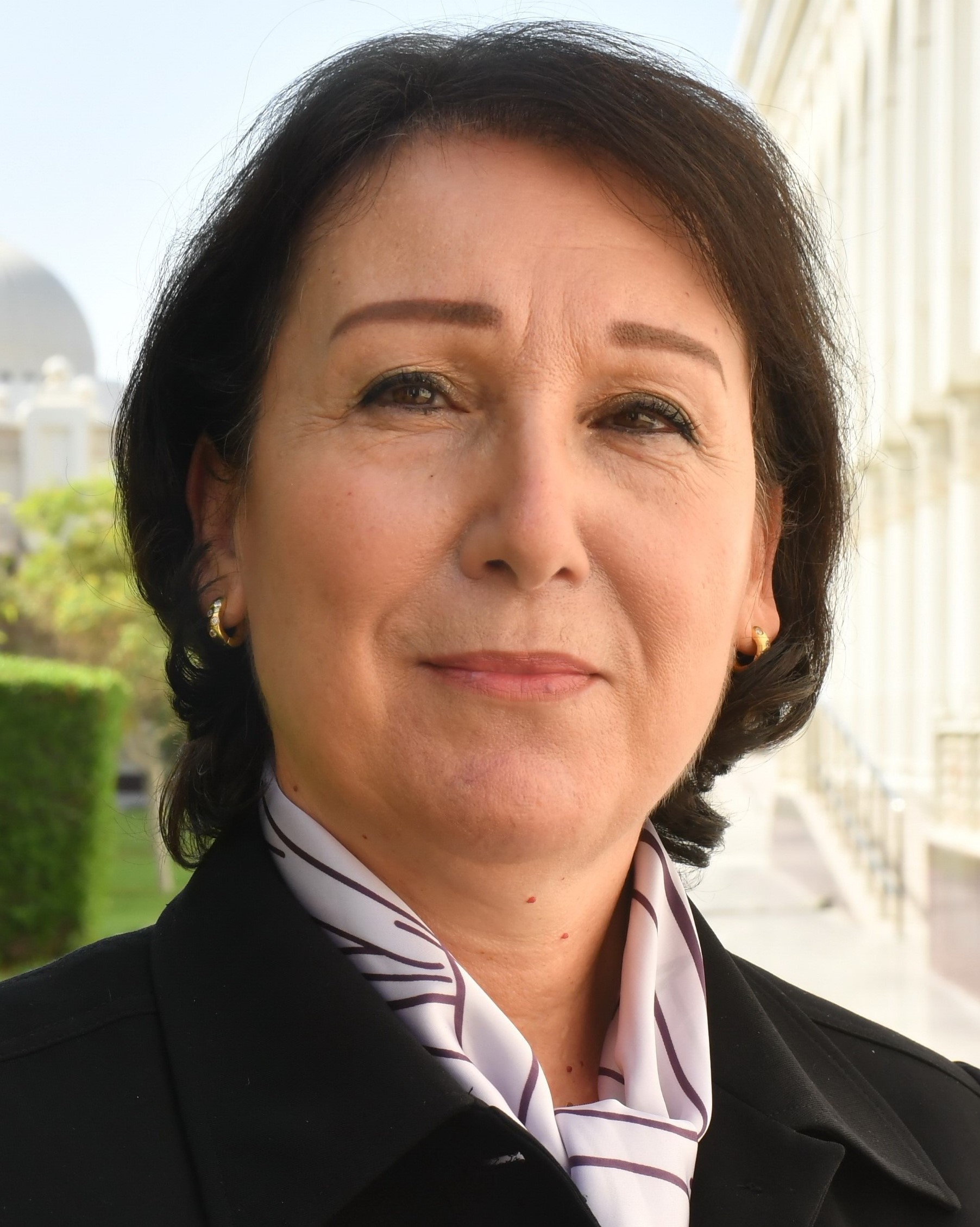 |
TITLE: SUSTAINABLE OPTIMIZATION IN THE AGE OF AI: DECISION INTELLIGENCE FOR GLOBAL SUPPLY CHAINS AND INDUSTRIAL SYSTEMS Operations Research (OR) and optimization have long supported engineering management decisions, but today's global industrial processes face new challenges, including decarbonization, circular-economy requirements, disruptions, volatile demand and energy prices, and rapid digital transformation. These forces redefine "optimality" beyond cost and efficiency toward sustainability, resilience, and societal impact. A new form of decision intelligence is emerging at the intersection of OR, optimization, and artificial intelligence. Sustainability pressures are pushing models beyond deterministic, single-objective thinking toward formulations that are policy-aware and uncertainty-informed, explicitly embedding carbon constraints, green investments, and circular flows. In parallel, AI is redefining the speed and responsiveness of decision-making by improving prediction (demand, disruptions, emissions), accelerating decision cycles, and enabling adaptive control. Insights from recent work on sustainable closed-loop supply chains and AI-enabled operational decision-making illustrate how hybrid AI–OR methods can connect strategy, planning, and execution, supporting strategic design, tactical planning, and real-time scheduling in the presence of disturbances. The closing message is an agenda for engineering management: prioritize interpretability and scalability, validate through digital twins, and translate methods into practical deployment for global industrial impact. |
|
| Prof. Dr. Andre D.L. Batako - Reader in Sustainable Advanced Manufacturing Technologies, The General Engineering Research Institute, Liverpool John Moores University, UK | ||
|---|---|---|
 |
TITLE: SUSTAINABLE MANUFACTURING, ETHNICS & CHALLENGES FOR A TRUE CIRCULAR ECONOMY The transition to a circular economy represents one of the most transformative ambitions of the 21st century, demanding not only technological innovation but also deep ethical reflection form the inception throughout the life of the innovation. Sustainable manufacturing lies at the heart of this transition, where material cycles are closed, waste becomes a resource, and value creation aligns with ecological and social well-being. Yet, realizing a true circular economy remains fraught with ethical dilemmas and systemic challenges. Here, we explore the moral, technological, and policy dimensions of sustainable manufacturing within a circular economy framework. We interrogate questions of equity, transparency, and responsibility across global value chains, asking who benefits, who bears the costs, and how circularity can avoid reproducing existing inequalities e.g. child labour, unfair prices and wages. Equally, we examine the challenges of implementing circular principles at scale, from lifecycle design and supply chain traceability, materials, to energy use, data ethics, and regulatory coherence. Drawing on contemporary research, industry practices, and international policy frameworks such as the SDGs and the EU Green Deal, the presentation emphasizes the need for ethical governance, interdisciplinary collaboration, and innovation ecosystems that promote long term sustainability over short term gains. Ultimately, this is a call for a rethinking of manufacturing ethics, where circularity is not merely a technical fix, but a moral commitment to justice, stewardship, and resilience in the current geo-political era, in which human activity has the most detrimental influence on climate and natural habitat. Anthropocene. Greg Ramm, Country Director for Save the Children said: “We’re seeing a huge need for green energy solutions globally, which heavily relies on cobalt – but it is imperative that what fuels our smartphones, computers, and electric cars doesn’t also fuel child rights violations” |
|
| Professor David Oloke - Professor of Civil Engineering and Head of School of Engineering and the Built Environment, Anglia Ruskin University, UK | ||
|---|---|---|
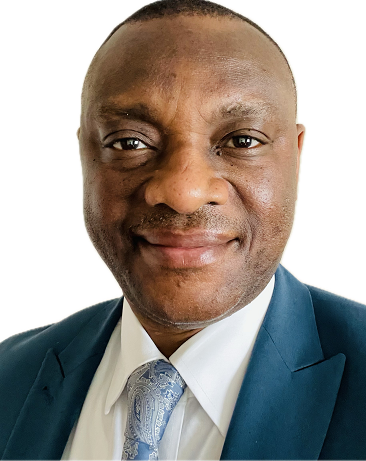 |
TITLE: IMPROVED ALTERATION AND REFURBISHMENT OF HERITAGE BUILDINGS - A CONCEPTUAL DIGITAL TWIN/ INDUSTRY 5.0 MODEL The adaptive reuse of historic listed buildings frequently requires sensitive internal alterations to improve accessibility, accommodate new functions, and enhance user capacity, while preserving the structural integrity and architectural significance of the original fabric. Recent advances in digital technologies have enabled innovative approaches to managing these competing demands. In particular, the application of digital twins—virtual representations of physical assets continuously updated through sensor data—has shown growing potential in heritage contexts, with emerging examples in cathedral monitoring, bridge retrofitting, and museum conservation where structural performance is tracked in real time without intrusive interventions. This paper presents a case study of a Grade-listed church originally constructed circa 1861, where internal reconfiguration included new access routes, redefined functional spaces, and the installation of a gallery seating area. The gallery was designed as a fully self-supporting steel frame with composite metal decking, deliberately isolated from the historic masonry and timber elements to avoid load transfer to the original structure. A digital twin framework aligned with Industry 5.0 principles was adopted, integrating IoT-enabled displacement sensors strategically installed on the new steel frame and at selected non-invasive reference points within the existing building. The methodology combined laser scanning/3D Modelling, BIM-based structural modelling, and real-time sensor data integration to create a living digital twin capable of reflecting the as-built condition and in-service behaviour of the intervention demonstrating how digital twins can reconcile modern functional requirements with the stewardship of historic buildings. |
|
| Dr. Eng. Joanna Czerska - Assistant Professor, Dean’s Representative for Learning Outcomes Assurance, Department of Management and Quality Engineering, Faculty of Management and Economics, Gdańsk University of Technology | ||
|---|---|---|
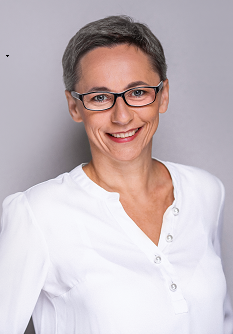 |
TITLE: FROM MANAGING RESULTS TO DEVELOPING PEOPLE. A SHIFT IN LEADERSHIP THINKING INSPIRED BY MASAO NEMOTO Contemporary organizations operate under intense performance pressure, often equating management with target achievement and performance control. Yet does a strong focus on measurable results truly build long-term adaptability and systemic capability? Or does it reinforce short-term efficiency at the expense of organizational maturity? Masao Nemoto, a senior Toyota executive and contributor to the concept of Kanri, proposed a different understanding of leadership. In his view, management is primarily about developing people — their ability to think independently, make responsible decisions, and act in alignment with organizational direction. Results are not the ultimate purpose of leadership; they are a consequence of the quality of managerial thinking and the conditions leaders create for others to grow. This presentation reflects on the shift from “managing results” to “developing people” as a fundamental change in the leadership paradigm. It invites participants to explore key questions: Where does my responsibility as a leader truly end? Do I cultivate dependence or capability? And does the organization I help shape become stronger because of the way I lead? |
|
| Prof. Katarzyna Antosz - Department of Manufacturing Processes and Production Engineering, Rzeszow University of Technology, Rzeszów, Poland, Reader in Sustainable Advanced Manufacturing Technologies, The General Engineering Research Institute, Liverpool John Moores University, UK | ||
|---|---|---|
 |
Reader in Sustainable Advanced Manufacturing Technologies, The General Engineering Research Institute, Liverpool John Moores University, UK TITLE: PREDICT, IMPROVE AND SUSTAIN: LEAN SIX SIGMA POWERED BY MACHINE LEARNING As global industrial processes become increasingly complex and variable, integrating machine learning (ML) with Lean Six Sigma allows for faster, more reliable, evidence-based improvements. This presentation will demonstrate how ML can accelerate Lean Six Sigma projects by streamlining the 'Measure' and 'Analyse' phases through structured data preparation, feature engineering and predictive modelling. It will also show how Lean goals such as improved flow and waste reduction can be achieved in the 'Improve' phase. Furthermore, it will demonstrate how gains can be sustained in the Control phase by operationalising models with MLOps practices, including model validation, deployment governance, and continuous monitoring of data and model drift. The DMAIC cycle will form the basis of the integration, with ML monitoring being linked to Statistical Process Control (SPC) to close the loop. Selected industrial case studies will be discussed to illustrate scalable implementation paths and typical pitfalls in high-variability production environments. The key message is that ML strengthens decision-making in Six Sigma projects and increases the probability of achieving a sustainable, repeatable impact on a large scale. |
|